Anger: everyone's least favourite emotion
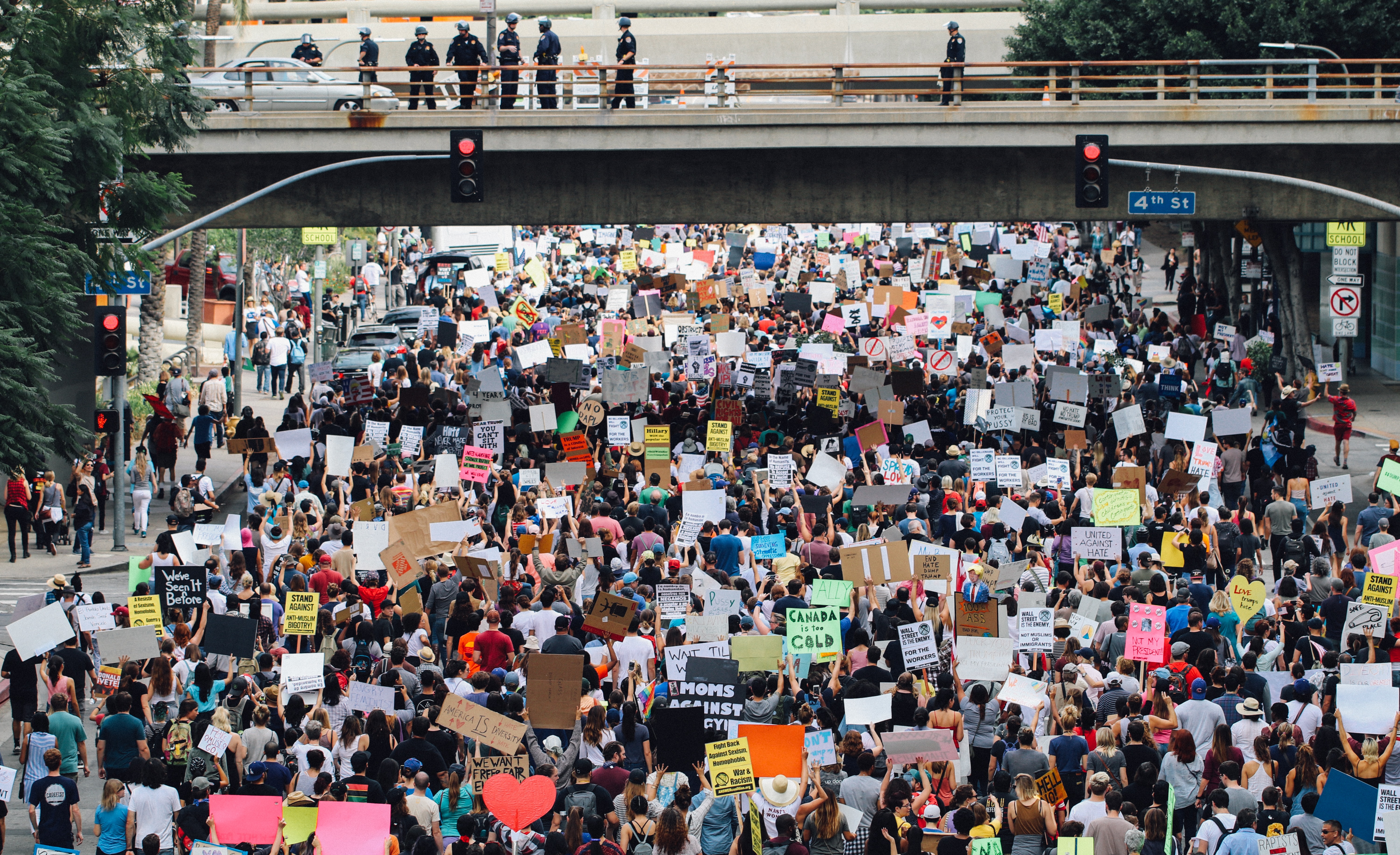
Photo source: Alex Radelich, Unsplash
I often conduct an exercise during conflict transformation training where I have people rate their comfort level with intense emotions.
As soon as we start talking about anger, the comfort level goes WAY down.
People avoid it, fear it, freeze in the face of it.
When I teach people to make space for emotion and invite it in so they can work with it to find a way forward, fear rises when we talk about inviting anger to a place at the table.
We imagine rooms full of shouting people, fists raised high, threatening violence, intimidating others.
I recently ran a master class on safety planning for public meetings, a session created because of the number of times I hear the fear of gathering people together in volatile situations, and the yearning for tools to control and manage the anger. Building our skills to work with anger is crucial to de-escalating conflict.
Many of us learned at a young age that anger was dangerous. We've been socialized that anger is bad, something that signals that things are wrong, and the person expressing it is behaving in inappropriate ways, sending a message that suppression is the appropriate response.
Anger is so often perceived as a sign of:
- aggression (versus assertion),
- incivility (versus respect) and
- hostility (versus cooperation).
You can't have conflict without anger. You can have other emotions in conflict, like grief, fear, frustration, cynicism, distrust and more, but you always have anger.
We've all learned that anger = conflict.
Conflict is hard, uncomfortable and most people don't know how to navigate the conflict landscape.
We live in a time of outrage, polarization, disconnect. That means anger is circulating around us, between us, and also within us.
Research shows that when we surrender to righteous anger, our brains release dopamine. Dopamine is a feel good chemical, resulting in feelings of pleasure, satisfaction and motivation. We release the rage, and our bodies respond with a rush, and we perceive that things are better because we let it all out.

Photo source: Maximum Rage Room, Humble, Texas
There has been a rise in "rage rooms" over the last number of years, where people go to let their anger out, expressing violence, aggression and rage in relatively secure facilities. This tendency plays on our physiology, simulating pleasure when we unleash our righteousness.
We see the visceral, volatile nature of anger playing out on social media, where things go "viral" and infect others in uncontrolled ways, laying waste to careers, credibility and the truth in the interests of righteously generated satisfaction.
Anyone who has been in a large group of people knows that emotion is contagious. My favourite definition of emotion is that it is energy in motion.
The energy of anger is powerful, intense and very crackly. You can feel it in your shoulders and belly, between you and someone else like a physical force, and like a dragon breathing fire marching around a room. It is a palpable force that needs to be channeled and worked with.
The interesting thing about the unleashing of righteous anger and the dopamine hit that ensues is that it generates misinformation in our bodies.
Unleashing anger on others feels good in the moment, but almost never results in change. Unleashing anger makes us feel powerful in the moment, even if the tirade has changed nothing.
In the aftermath, we often feel less satisfied and more full of rage. Spewing anger makes us feel like we did something but there is no responsibility, accountability or action. We are still stuck in the challenge we were in before the venting, and now we are even angrier.
If those are all the challenges anger brings with it, there is something else about anger that is important for us to focus on.
We can change our relationship with anger.
When we reframe our relationship to an emotion, it frees us from the limitations and anxiety we associate with it.
Anger can be a very healthy emotion.
We can see it as a way of identifying when a boundary has been crossed, when something needs to change. It can be a catalyst emotion, creating energy and momentum for alternate ways of living and operating.
#1 Regulate your own anger

In order to work with the anger other people bring, you need to be able to work with your own.
The more capacity you have within you for an emotion, the more space you can create for that emotion when other people bring it to the table.
When I feel the heat rising through my body, usually moving from my feet up to my chest, leaving me feeling flush and queasy, I've trained myself to stop and ask "what is going on here?" It is a very simple question but it triggers a pause, a breath, and a curiosity that sets me up to wonder about the anger rather than to react to it or become it. It has taken me a long time to train myself with that question, so that my brain knows it has alternate neural pathways to choose. It helps if I have prepared myself in advance so I go into a potentially challenging situation already calm and grounded.
- Prepare yourself for a challenging conversation with a practice that grounds and calms you.
- Know what your own anger response feels like and over time practice noticing the physical reactions you have to anger. When those reactions occur, slow things down for yourself
- Breathe deeply. Practice box breathing in the moment, or place a hand on your chest or belly and breathe in and out to keep your nervous system as calm as possible.
- Try a reframe on the situation. For example, when the heat rises within me I have a phrase I use to remind myself "This means it matters" which allows me to see the situation as important and reminds me to stay present.
- Name the emotion for yourself. I'm getting frustrated, I'm starting to feel pissed off, I'm noticing I'm reacting....Acknowledging emotions reduces their intensity, and prompts your pre-frontal cortex to engage, promoting you to respond thoughtfully rather than reactively.
- Know your limits and boundaries. Where and when will you need to tap out? What are the limits to your capacity to engage well? When might you need to take a break or pause the conversation so you can recover? You always have choices, so choose what is right for you.
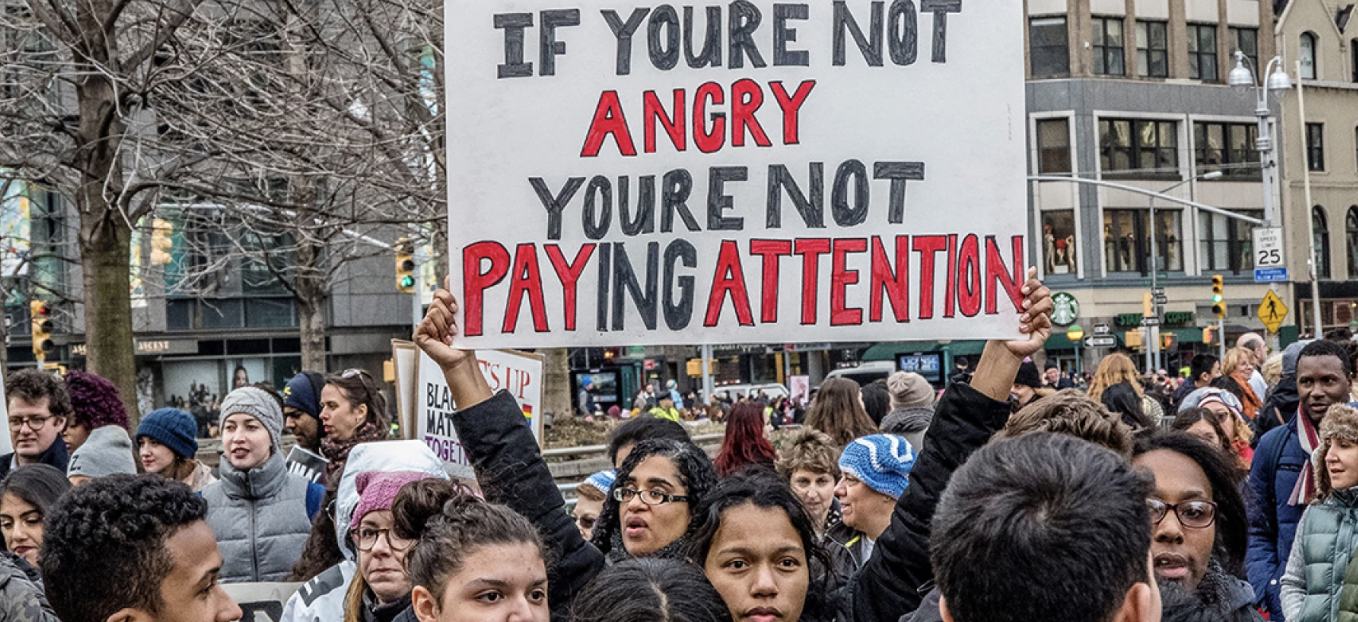
#2 Work with anger in other people
Other people's anger is the thing so many of us fear. Working with your own anger to build your capacity for the emotion is the first step to creating a space at the table for the anger of others.
Dr. Tara Brach's work is rich and thoughtful and she shares many resources on working with anger. One of her recommend approaches is RAIN, which I have adapted here for work with groups.
- R=Recognize. Recognizing means consciously acknowledging the thoughts, feelings, and behaviors that are happening. In the context of working with other people's emotions, this means acknowledging your own emotions, and also theirs. This can include naming the emotions you are noticing, acknowledging the words, concerns, challenges and hopes that are voiced, recognizing the behaviours and energy that is present in the exchange.
- A=Allow. Allowing means welcoming whatever is showing up to be fully present and visible. It means being present to whatever has shown up without trying to stop it, remove it, avoid it or fix it. Note: you should always be sure to prioritize safety, so don't make space for behaviours or actions that could cause harm.
- I=Investigate. Get curious. Inquire, question, lean in with compassion and interest to understand at a deeper level someone's experiences, challenges, pain or anger. Look for an opportunity to embrace the whole person, and look into their whole experience. Broaden the conversation so you get a better sense of what is happening for them. Stay present to the moment, rather than trying to steer things with an agenda.
- N=Nurture. Care for the human being across from you, as well as being compassionate for yourself in the moment. This isn't about getting it "right"; instead it is about being present to a moment of shared humanity, nurturing relationship, building connection, calming the moment to dig deeper.
When working with a group, consider how to use facilitation design and dialogue based strategies to channel the anger. For example:
- Control based approaches will backfire as people perceive they are being manipulated and managed. Instead, choose approaches where participants have control over what gets talked about (have participants prioritize the agenda or identify topics), how they participate (give multiple options).
- Have people talk with each other more than you talk at them. Angry people need to vent and get things off their chests. Releasing the emotion can let some pressure reduce, before you share information in response to the issues people vented about.
- Design for venting and then a shift. People can get stuck in venting and emotion is contagious, so when you design to allow people to vent know where you are going to channel the energy next. What process will you use to channel the energy? What questions will you ask?
- Consider incorporating physical movement. Moving allows for processing of emotions and pushes a light pause on a high arousal state. Get people moving to different tables, and set your room up for movement.
- Focus on people's grievances rather than your agenda. Give people agency and recognize that until you talk about what people want to talk about you won't be able to talk about what you want to talk about.
- Choose approaches that focus on "yes, and" rather than "ether / or". Angry people are often absolute in their thinking, focused on yes or no, good or bad. Instead, gently increase the complexity of the conversation, looking for opportunities to reduce polarization and increase common ground and shared humanity.
Working with anger is an ongoing practice. It requires curiosity, humility, presence and patience. It teaches you how to stay with discomfort. It deepens understanding and requires you to stretch your skills.
You can't de-escalate conflict unless you can work with anger, so keep going, keep practicing.