Ask better questions, get better results

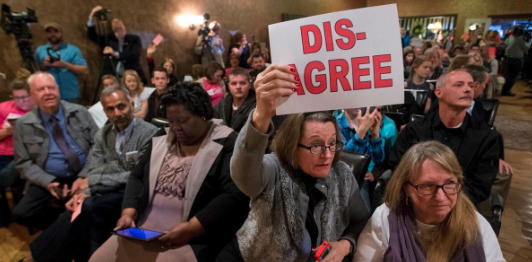
Photo credit: CBC News
Leaders are often told they need good answers. Answers for the media, for members of their team, answers that solve problems. Leaders are trained to know things, to be the expert in the room.
That model of leader as expert is outdated and doesn’t work in a volatile, complex and constantly changing environment. It isn’t that answers aren’t important, it is the idea that one person has the answers that is out of pace.
In the world we live in, there are no simple fixes, no easy solutions to straight-forward problems leaders are asked to solve. Instead, there are increasingly complex and novel challenges that have never been solved before, and reactive, polarized dynamics that inflame conflict. There are facts based on past research, and a lack of conclusive research that points a way to the future. There is an overwhelming lack of trust in government, the media, large institutions.
Leaders who lead well know how to ask great questions. Questions that:
- Help them understand the real problem and how context, perception, and actions have contributed to the problem
- Help them understand how different people have been impacted in different ways by the situation, helping to understand the depth, breadth and scope of the problem
- Brainstorm ideas, suggestions, options for all the ways forward that could work and hear from others their thoughts about pros, cons and trade-offs to weigh the many possible choices to address a complex situation
- Grow connection, create allies and collaborators and build trust and strengthen relationships
- Allow for solutions to adapt and change over time as real-world impacts are understood
It is questions, not answers, that deepen understanding, help us find common ground, elicit stories and experiences that inform decision-making.
Questions can change everything. There are so many kinds of questions you can ask, and every question either opens up the situation and the people involved – or shuts it down.
There is an architecture to great questions:
- They center people rather than solely focusing on the issue
- Are broad and open and can be answered in multiple ways by multiple people
- Invite discovery and challenge
- Welcome emotion as a path to make meaning
- Are contextual and intentional
A leader can ask questions with specific purpose.
- Are you asking questions to grow connection and build trust?
- Are you asking questions to shift positions – from negative to positive, from constrained and limited to open and expansive, from resistant to contributing?
- Are you asking questions that help you understand lived experiences to see the extent of impacts and consequences?
- Are you asking questions to elicit ideas, suggestions, creativity for a way forward?
- Are you asking questions to support decision-making and weighing the pros and cons of options?
For example, questions that grow connection and build trust lay a foundation for people to be seen, heard and valued. They also allow us to see beyond assumptions and judgements and welcome the humanity of the whole person into the conversation. They look like:
- What is something you can tell us about yourself that does NOT include your role, title, position or work activities? What is something we could learn about you as a person that would help us see you?
- What brought you to this conversation today? What did you choose to give up so you could be in this discussion?
- Why did you prioritize this topic? What does it mean to you?
- Tell me about a time you felt like your input and experience mattered? What happened?
- What matters most to you about this issue? How will it impact your life, community and the people you care most about?
As another example, shift questions move people from one place to another one, opening up their own perception and understanding, and expanding the listener’s understanding. They often include acknowledgement and require setting of context. They look like:
- Thank you for sharing your experience. This has been a challenging time. I wonder if we could brainstorm what we DO want instead of what we DON’T want?
- If we were five years in the future, and you were going to tell others in the community what has changed, what would that change look like?
- There are a lot of people with concerns in this room. What could we do to address those concerns?
- What is most important to you in this situation? What do you think is most important to others?
Questions are one of the most powerful skills a leader can apply, and they are both an art and a science. You can grow your skills to ask better questions, and by asking better questions you will get better results.
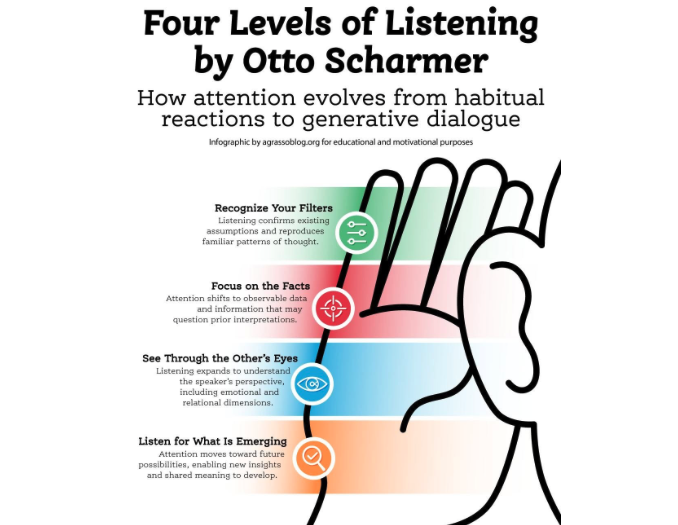
While I’ve talked about how important it is to ask better questions, I haven’t touched on the skill of listening.
If you aren’t listening deeply and well, to the responses, feelings, tone, gestures and experience that is being gifted to you, your questions won’t mean much. Generative listening goes hand in hand with asking better questions. Listening is a foundational leadership capacity, but that is a topic for another blog.