Liberation is contagious
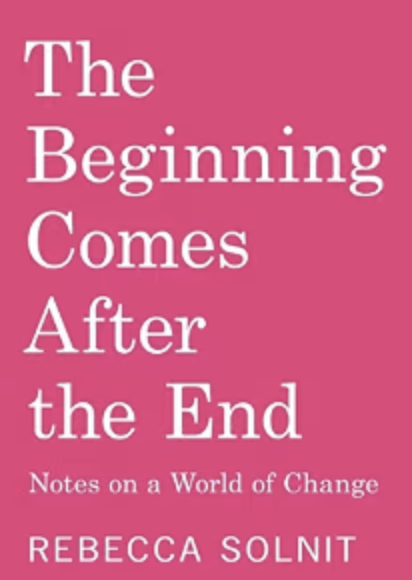
A few weeks ago I was invited to participate in a systems change book club with a few other thoughtful, smart, change-makers. Our first book was The Beginning Comes After the End by Rebecca Solnit. (If you haven't read it, I would encourage you to read everything she has ever written.)
There was a line in the book that hit me right in the heart: "Liberation is contagious." The exact statement goes further than those three words extending to "Liberation is contagious, as an idea and a process."
I teach a lot of people about working with emotion, often in the context of conflict or change, and I emphasize how contagious emotion can be. I'm usually talking about anger, fear, grief, frustration, cynicism and other heavy, challenging emotions. When I read that sentence, I suddenly remembered that the light, expansive, spacious emotions are also contagious. That possibility and motion is the source of social movements, innovation and freedom.
When I googled "liberation is contagious" I learned that Toni Morrison said something similar in a 1979 speech at Barnard College: "Liberation is contagious—but only if we let it be" where she encouraged a recognition that true freedom involves an unyielding responsibility to lift others up.
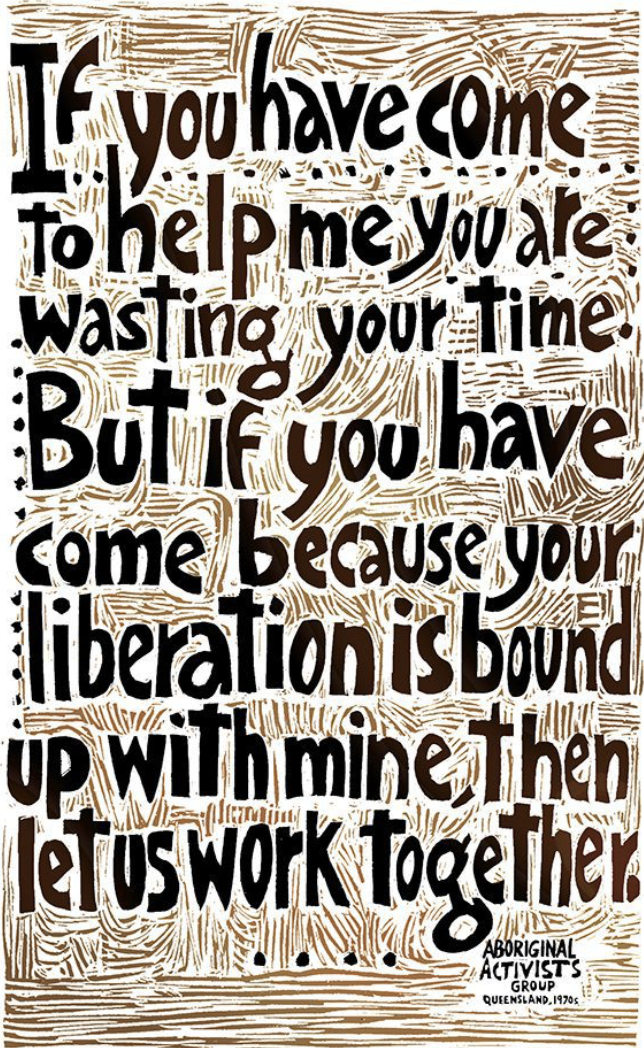
Then I learned that Indigenous Australian activist Lilla Watson said: "If you have come here to help me you are wasting your time, but if you have come because your liberation is bound up with mine, then let us work together."
There are threads I want to pull from each of these statements to turn into something that guides our work in these tumultuous times. Usually when I write, the insight or the message becomes clear. This time it feels like there is something under the surface that is wanting to emerge, so when you read this if the insight is clear to you leave me a comment!
Here is what I am seeing so far:
If we create spaces, places and conversations where we emphasize joy, possibility, spaciousness we build an energy that draws people in and gives them something to be FOR, rather than against.
- Practically that could translate to knowing what you stand for and clearly communicating it. Think of Texan politician James Talarico's recent message of "love thy neighbour".
- It could also look like thoughtful crafting of questions to invite exploration, hope and freedom. Questions like: what do we dream of, imagine and yearn for? What do we want more of? What do we appreciate that we can build on?
If we emphasize how we are inter-connected, that our success as communities, organizations and society is bound up in each other's success, we link freedom with responsibility.
- Practically that could translate into leaders finding the courage to reject the us versus them polarization that is dividing communities and call for accountability and leadership to work together for the greater good. It will require brave souls to stand up and say the divide is serving a very small group of people and harming most of us, to call for action and new norms of putting aside personal agendas and striving for common ground.
- It could also mean asking thoughtful questions like: What would someone who is not here today offer that is different than what we have talked about? What do we need to consider and reflect on that is a different path than the ones we have explored? What might we blind to or what assumptions might we have made?
If liberation is contagious as both an idea and a process (and a feeling) then what if we made this a guiding principle for our design of conversations, events and community engagement activities? What if we designed processes and measured their success based on whether they connected people to each other, lifted them up, gave them hope for the future?
- Practically, that would significantly change our framing of conversations from a focus on problems and concerns to solving problems together in ways that make things better for everyone.
- This would impact our choice of methods and tools that bring people together to make more space for rich, deep, thoughtful conversations that surface real needs and hopes.
- That would change the dynamics between conversation hosts and participants, between participants themselves to see with new eyes, to feel what freedom feels like collectively, to explore ideas and possibility, and leave feeling more expansive and possible.
- It would require us to measure success in new and different ways, to evaluate our processes based on criteria that centres people and their experience, feelings and interactions in the process.
It might require new and different skills of leaders, engagement professionals and participants as well, as we all grow the capacity to be free and responsible for each other.
Recent research from the University of Missouri shows that hope is the key to a meaningful life, mental health and resilience.
Instead of focusing on the divide, despair, conflict and polarization between us, perhaps we need to put our energy on what we want to grow more of in our organizations, lives and communities?
Freedom, hope, possibility, connection; if we want more of these between us, we need to make different choices in our processes, words and actions.
If liberation is contagious, making small, consistent acts over time will build a movement where freedom grows.
In these tumultuous times, hope is the antidote to division and despair.